


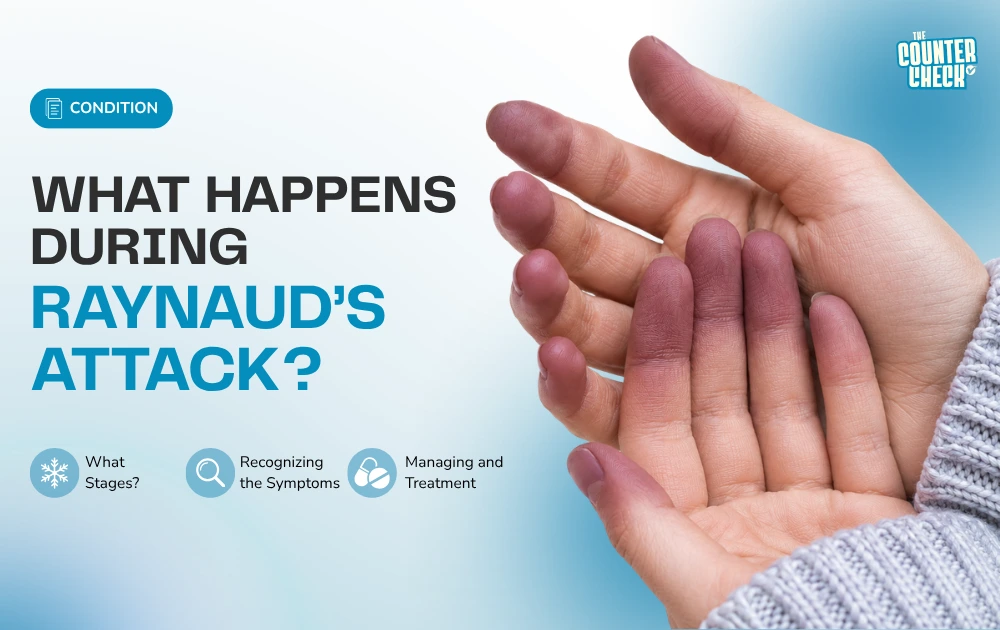
Wondering what’s actually happening during a Raynaud’s attack? From the moment your fingers or toes begin to change color until normal circulation returns, your body goes through a series of temporary changes. In this guide, we’ll walk you through each stage of a Raynaud’s attack, the symptoms you may notice, and what happens as you recover.
What Is a Raynaud’s Attack?
A Raynaud’s attack, also called a Raynaud’s episode, is a temporary episode in which the small blood vessels narrow more than they should, reducing blood flow to certain parts of the body. These episodes are most often triggered by cold temperatures or emotional stress and usually affect the fingers and toes, although other areas can also be involved.
During an attack, the narrowed blood vessels limit the amount of oxygen-rich blood reaching the affected area. This causes the characteristic color changes, coldness, numbness, and other symptoms associated with Raynaud’s. The good news is that the reduced blood flow is usually temporary. As the blood vessels relax and widen, normal circulation returns, and the symptoms gradually improve.
A Raynaud’s attack may affect one finger, several fingers, an entire hand, or multiple fingers and toes at the same time. The pattern can vary from person to person and even from one attack to the next.
The frequency of attacks also differs widely. Some people experience episodes only a few times a year, while others may have attacks every day during colder months or whenever they’re exposed to common triggers. The frequency often depends on the type of Raynaud’s, individual trigger sensitivity, and environmental conditions.
What Happens Inside the Body During a Raynaud’s Attack?
Although a Raynaud’s attack may seem to happen suddenly, it actually occurs in several stages. From the moment you’re exposed to a trigger until normal blood flow returns, your body goes through a series of temporary changes that affect circulation, oxygen delivery, and the appearance of your skin.
Stage 1: A Trigger Activates the Response
A Raynaud’s attack usually begins after exposure to a trigger, most commonly cold temperatures or emotional stress. Under normal circumstances, your body responds by slightly narrowing the small blood vessels near the skin to help conserve heat.
In people with Raynaud’s, however, this response is much stronger than it needs to be. The nervous system signals the blood vessels to constrict excessively, even when the trigger is relatively mild, such as holding a cold drink or walking into an air-conditioned room. For many people, this process begins within just a few minutes of exposure.
Stage 2: Blood Vessels Narrow (Vasospasm)
As the attack progresses, the small arteries supplying the affected fingers, toes, or other body parts suddenly tighten in a process called vasospasm. This causes the blood vessels to become much narrower than normal, allowing less oxygen-rich blood to reach the surrounding tissues.
Although circulation is significantly reduced during this stage, the blood vessels are not permanently blocked or damaged. They are simply constricted for a short period of time and will usually reopen once the attack begins to resolve.
Stage 3: Blood Flow Drops
With less blood reaching the affected area, the tissues receive less oxygen and warmth than they normally would. As a result, the fingers or toes may begin to feel:
- Cold
- Numb
- Less sensitive to touch
Because the muscles and nerves aren’t receiving their usual blood supply, everyday tasks that require fine motor control, such as buttoning a shirt, typing, writing, or picking up small objects, may become more difficult until circulation improves.
Stage 4: Skin Color Changes
One of the most recognizable features of a Raynaud’s attack is the change in skin color. These changes happen because the amount of blood and oxygen reaching the affected tissues changes throughout the attack.
White (Pallor)
The first stage is often white, or pallor. As the blood vessels constrict, very little blood reaches the affected area, causing the skin to lose its normal color and appear pale or white.
Blue (Cyanosis)
If blood flow remains reduced, the affected tissues begin using the limited oxygen that’s available. As oxygen levels fall, the skin may turn blue or purple, a stage known as cyanosis. This color change reflects the reduced oxygen supply rather than a complete lack of blood flow.
Red (Reactive Hyperemia)
As the attack ends, the blood vessels begin to relax and reopen. Oxygen-rich blood quickly flows back into the affected area, often causing the skin to turn bright red. This stage, called reactive hyperemia, may be accompanied by warmth, throbbing, tingling, or a pins-and-needles sensation as circulation returns.
Not everyone experiences all three color changes. Some people notice only white and red fingers, while others experience blue without first becoming pale. The pattern can vary from person to person and even between attacks.
Stage 5: Recovery Begins
As the blood vessels continue to relax, circulation gradually returns to normal. Oxygen and nutrients once again reach the tissues, allowing the skin to regain its usual color, warmth, and sensation.
Recovery may happen naturally once the trigger is removed, but it often occurs more quickly after moving to a warmer environment or gently warming the affected hands or feet. For most people, symptoms gradually fade as blood flow is restored, although some may continue to experience tingling or mild discomfort for a short time afterward.
What Does a Raynaud’s Attack Feel Like?
A Raynaud’s attack can feel different from one person to another. Some people experience only mild discomfort, while others find that attacks are painful enough to interfere with everyday activities. The sensations you feel often depend on how much blood flow is reduced and how long the attack lasts.
During the Attack
As blood flow decreases, the affected fingers, toes, or other areas may feel:
- Cold, even if the rest of your body feels warm.
- Numb, making it difficult to feel objects or changes in temperature.
- Tingly, especially as the attack begins.
- Like pins and needles, similar to the feeling of a limb “falling asleep.”
- Tight or stiff, making the fingers or toes feel less flexible.
- Difficult to move, particularly during more severe attacks.
- A loss of grip or dexterity, making tasks such as buttoning clothes, typing, holding a pen, or picking up small objects more challenging.
The severity of these symptoms varies from person to person. Some attacks cause only mild coldness and numbness, while others involve significant discomfort and temporary difficulty using the affected hand or foot.
As Blood Flow Returns
When the blood vessels begin to relax and circulation returns, you may notice a different set of sensations as the affected tissues warm up again. These may include:
- A burning sensation.
- Throbbing or a feeling of pressure.
- Pulsing as blood rapidly flows back into the area.
- Aching or mild soreness.
- Increased sensitivity to touch or temperature.
- Mild swelling in some people as circulation is restored.
Although these sensations can be uncomfortable, they’re usually a sign that blood flow is returning to normal. Most symptoms gradually improve as circulation is restored, and they typically resolve completely once the attack has ended.
Which Body Parts Can Be Affected?
The fingers are the body part most commonly affected during a Raynaud’s attack, but they’re not the only area where symptoms can occur. Any part of the body with small blood vessels close to the skin’s surface can be affected when blood flow is temporarily reduced. Although the pattern varies from person to person, the following areas are affected most often.
Fingers
The fingers are the most common site of a Raynaud’s attack because they contain many small arteries that play an important role in regulating body temperature. They’re also one of the first parts of the body to lose heat when you’re exposed to cold. During an attack, one finger, several fingers, or all the fingers on one or both hands may become cold, numb, and change color as blood flow decreases. Because the fingers are essential for everyday tasks, even a mild attack can make it difficult to grip objects, write, type, or button clothing.
Toes
The toes are affected for many of the same reasons as the fingers. They are located far from the heart, have many small blood vessels involved in temperature regulation, and are often exposed to cooler temperatures, especially during colder months. When blood flow is reduced, the toes may become cold, numb, painful, or difficult to move comfortably, making standing or walking uncomfortable until circulation returns.
Nose
The nose contains numerous small blood vessels just beneath the skin, making it particularly sensitive to changes in temperature. Because it is almost always exposed to the surrounding environment, it can lose heat quickly. During a Raynaud’s attack, the nose may feel unusually cold, numb, or appear pale or bluish until blood flow returns.
Ears
Like the nose, the ears have very little fat or muscle to help retain heat. Their constant exposure to cold air makes them especially vulnerable to reduced circulation. During an attack, the ears may become cold, pale, painful, or tingly, with symptoms gradually improving as normal blood flow is restored.
Lips
Although less commonly affected, the lips can also experience reduced blood flow during a Raynaud’s attack. Because they’re rich in small blood vessels and have thin, delicate skin, changes in circulation can become noticeable very quickly. Some people develop pale or bluish lips along with numbness, tingling, or increased sensitivity until the episode resolves.
Nipples
Raynaud’s can also affect the nipples, particularly in women who are breastfeeding. Cold exposure or breastfeeding itself may trigger the small blood vessels to narrow suddenly, causing sharp, burning, or throbbing pain. The nipples may temporarily turn white, blue, or purple before returning to their normal color as circulation improves.
Although these are the most commonly affected areas, Raynaud’s doesn’t affect everyone in the same way. Some people experience attacks in only one or two fingers, while others may notice symptoms involving multiple fingers, toes, or several areas of the body at the same time. The location and severity of attacks often depend on the type of Raynaud’s, individual trigger sensitivity, and environmental conditions.
Frequently Asked Questions
How long does a Raynaud’s attack last?
Most Raynaud’s attacks last only a few minutes, although some can continue for 15 to 30 minutes or longer. The exact duration depends on the trigger, how quickly you warm up, and whether you have Primary or Secondary Raynaud’s. If an attack lasts much longer than usual or is accompanied by severe pain or skin changes, seek medical attention.
Does every Raynaud’s attack follow the same stages?
No. Although many people experience the classic progression of white, blue, then red skin color changes, not every attack follows this pattern. Some people notice only one or two color changes, while others experience mainly numbness or coldness without obvious discoloration. The symptoms and stages can also vary from one attack to the next.
Can Raynaud’s attacks happen indoors?
Yes. While cold outdoor weather is a common trigger, attacks can also occur indoors. Air-conditioned rooms, handling frozen foods, holding a cold drink, washing your hands in cold water, or even emotional stress can trigger an episode in some people.
Does Raynaud’s permanently reduce blood flow?
No. During a Raynaud’s attack, blood flow is temporarily reduced because the small blood vessels narrow more than they should. Once the episode ends, the blood vessels relax, and circulation usually returns to normal. In most people, especially those with Primary Raynaud’s, these temporary changes don’t cause lasting problems.
Why do attacks hurt more when my fingers warm up?
As blood flow returns, the small blood vessels begin to reopen, allowing oxygen-rich blood to flow back into the affected tissues. This sudden increase in circulation can stimulate the nerves, causing throbbing, burning, tingling, or aching sensations. Although these feelings can be uncomfortable, they’re usually temporary and often indicate that circulation is returning to normal.
Can Raynaud’s attacks become more frequent over time?
Yes, they can. The frequency of attacks varies from person to person and may change over time. Factors such as colder weather, increased exposure to triggers, stress, hormonal changes, or an underlying medical condition can all influence how often attacks occur. In people with Secondary Raynaud’s, attacks may become more frequent or severe if the underlying condition progresses or isn’t well controlled. Working with your healthcare provider to identify triggers and manage your symptoms can help reduce the frequency of future episodes.
Can improving circulation cure Raynaud’s?
No. Improving circulation can help reduce the frequency and severity of attacks, but it doesn’t cure Raynaud’s. Lifestyle changes, medications, and treating any underlying medical conditions can all help manage symptoms and improve blood flow. The most effective treatment depends on whether you have Primary or Secondary Raynaud’s and your individual health needs.