

 Raynaud’s syndrome and Raynaud’s disease are terms you’ll often see used interchangeably, so it’s easy to assume they mean the same thing. While both involve episodes of reduced blood flow, there is an important difference between them. Understanding that distinction can help you better understand your diagnosis and what it may mean for your health.
In this guide, we’ll explain how Raynaud’s syndrome differs from Raynaud’s disease, what causes each condition, and what you need to know moving forward.
What Does Raynaud Look Like?
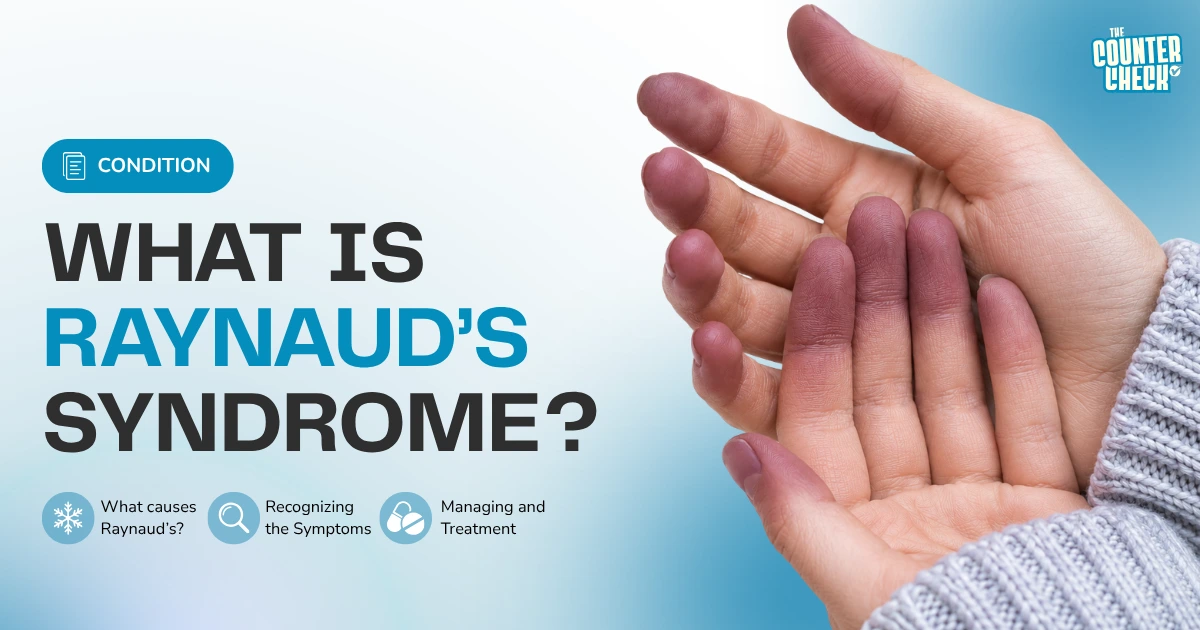
One of the most recognizable signs of Raynaud’s is the way the affected area changes during an attack. Symptoms usually develop suddenly after exposure to cold temperatures or emotional stress and most often involve the fingers or toes. However, the ears, nose, lips, and, less commonly, the nipples can also be affected.
During an attack, you may notice:
- White or pale fingers or toes, sometimes affecting only one or two digits.
- Blue or purple discoloration if blood flow remains reduced.
- Redness as the affected area begins to warm up and circulation returns.
- Cold skin that feels noticeably cooler than the surrounding areas.
- Numbness or tingling, making it difficult to feel touch or temperature.
- Mild swelling, throbbing, or burning as blood flow returns.
If your fingers or toes repeatedly change color in response to cold temperatures or emotional stress, it’s a good idea to speak with a healthcare provider. While these symptoms don’t always mean you have Raynaud’s, they can help guide further evaluation if needed.
Are Raynaud’s Disease and Raynaud’s Syndrome the Same?
Not exactly. Although the terms are often used interchangeably, they don’t always refer to the same condition.
In everyday conversations, people may use Raynaud’s disease, Raynaud’s syndrome, and Raynaud’s phenomenon to describe the same episodes of reduced blood flow to the fingers, toes, or other parts of the body. However, there is a medical distinction between these terms.
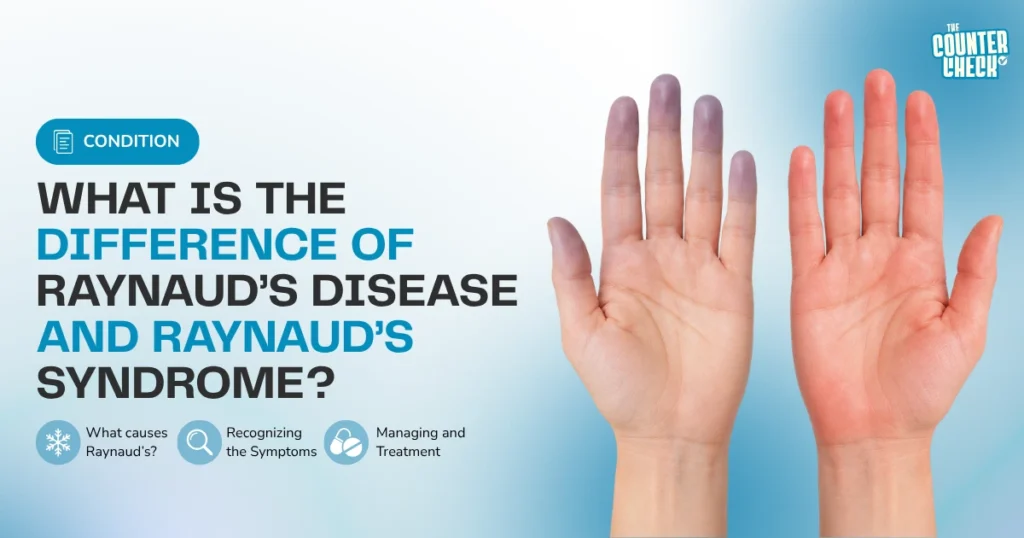
Raynaud’s disease generally refers to Primary Raynaud’s, which develops on its own without an underlying medical condition. Raynaud’s syndrome, also called secondary Raynaud’s phenomenon, usually refers to Raynaud’s that occurs as a result of another health condition, medication, or other underlying cause.
That said, many healthcare providers prefer using the broader term Raynaud’s phenomenon because it includes both the primary and secondary forms. This is why you may see different terms used across medical websites, research articles, and even by different healthcare professionals. In most cases, the context will indicate whether they’re referring to the primary or secondary type.
What Causes Each Type?
Although both types of Raynaud’s cause the same episodes of reduced blood flow, they develop for different reasons. Understanding what causes each type can help explain why symptoms vary from one person to another and why treatment approaches may differ.
Primary Raynaud’s (Raynaud’s Disease)
The exact cause of Primary Raynaud’s is still unknown. Researchers believe it may involve an overactive response of the blood vessels and nervous system, causing the small arteries to narrow more than they should when exposed to cold temperatures or emotional stress. Genetics may also play a role, as the condition sometimes runs in families. In most cases, however, no underlying disease can be identified.
Secondary Raynaud’s (Raynaud’s Syndrome)
Secondary Raynaud’s develops as a result of another underlying medical condition or external factor that affects blood flow.
Some of the most common diseases that cause Raynaud’s include autoimmune and connective tissue disorders such as systemic sclerosis (scleroderma), lupus, rheumatoid arthritis, and Sjögren’s syndrome.
Other possible causes include certain medications, such as beta-blockers, migraine medications containing ergotamine, stimulant medications, and some chemotherapy drugs, along with repeated use of vibrating tools, hand injuries, and exposure to certain workplace chemicals. Because it has an identifiable cause, managing the underlying condition is an important part of treatment.
If you’d like to learn more about what can trigger Raynaud’s and the conditions commonly associated with Secondary Raynaud’s, see our What Causes Raynaud’s? Guide.
How Symptoms May Differ in Both Diseases
Although both types of Raynaud’s share many of the same symptoms, the severity and pattern of attacks can differ. These differences can provide clues about whether someone has Primary or Secondary Raynaud’s, but a proper medical evaluation is needed to determine the cause.
Symptoms Often Seen in Primary Raynaud’s
Primary Raynaud’s usually causes milder attacks that affect the fingers or toes on both sides of the body in a similar way. Symptoms often begin during the teenage years or early adulthood and may occur only occasionally, especially when triggered by cold temperatures or emotional stress. Serious complications are uncommon because blood flow typically returns to normal after an attack.
Symptoms Often Seen in Secondary Raynaud’s
Secondary Raynaud’s tends to cause more severe and painful attacks. Symptoms may affect one side of the body more than the other and often develop later in life. In some cases, reduced blood flow can lead to skin ulcers, slow-healing sores, or tissue damage, especially if the underlying condition is not well managed. Because of the higher risk of complications, medical evaluation and treatment are especially important.
Keep in mind that symptoms can vary from person to person. Some people experience only occasional mild episodes, while others may have frequent or more severe attacks depending on the type of Raynaud’s and its underlying cause.
How Are They Diagnosed?
Diagnosing Raynaud’s begins with a review of your symptoms, medical history, and the pattern of your attacks. Your healthcare provider will also want to determine whether you have Primary Raynaud’s or Secondary Raynaud’s, as this can affect your treatment plan and long-term outlook.
To help make a diagnosis, your healthcare provider may recommend:
- A physical examination to look for signs of underlying conditions or complications.
- Nailfold capillaroscopy, a test that examines the small blood vessels near the fingernails for abnormalities that may suggest Secondary Raynaud’s.
- Blood tests to check for autoimmune diseases or other medical conditions that could be causing your symptoms.
The main goal of diagnosis is not only to confirm Raynaud’s but also to identify whether it occurs on its own or is linked to another health condition.
Does Treatment Differ?
Yes. While both types of Raynaud’s share some treatment approaches, the overall treatment plan depends on the underlying cause.
For Primary Raynaud’s, treatment often focuses on preventing attacks and managing symptoms. This may include avoiding cold temperatures, reducing stress, quitting smoking if applicable, and taking medications to improve blood flow when lifestyle changes aren’t enough.
For Secondary Raynaud’s, treatment involves both managing Raynaud’s symptoms and addressing the underlying condition that’s causing them. Depending on the cause, this may include treating an autoimmune disease, adjusting medications that trigger attacks, or avoiding activities that contribute to symptoms. Because Secondary Raynaud’s carries a higher risk of complications, ongoing medical care is often needed.
Which One Is More Serious?
In general, Secondary Raynaud’s is considered more serious than Primary Raynaud’s. While Primary Raynaud’s is usually a manageable condition that rarely causes lasting damage, Secondary Raynaud’s is linked to an underlying medical condition that can increase the risk of complications.
In some cases, prolonged or severe reductions in blood flow can lead to skin ulcers, slow wound healing, or tissue damage, particularly in the fingers or toes. These complications are more likely to occur if the underlying condition is severe or left untreated.
However, it’s important to remember that not everyone with Secondary Raynaud’s develops complications. Many people successfully manage their symptoms with the right combination of treatment, lifestyle changes, and regular medical care.
When Should You See a Healthcare Provider?
You should see a healthcare provider if your symptoms are new, worsening, or accompanied by other concerning signs. While many cases of Primary Raynaud’s are mild, certain symptoms may suggest Secondary Raynaud’s and should be evaluated promptly.
It’s especially important to seek medical advice if:
- Symptoms begin later in adulthood.
- Attacks become more frequent, severe, or painful.
- One side of the body is affected more than the other.
- You develop sores, ulcers, or wounds that heal slowly.
Symptoms occur alongside joint pain, skin changes, muscle weakness, or other signs of an underlying medical condition.
Early evaluation can help determine whether your symptoms are caused by Primary or Secondary Raynaud’s. Identifying an underlying condition as early as possible allows treatment to begin sooner and may help reduce the risk of complications.
Frequently Asked Questions
Is Raynaud’s disease the same as Raynaud’s phenomenon?
Not exactly. Raynaud’s phenomenon is the umbrella term for the condition and includes both Primary and Secondary Raynaud’s. Raynaud’s disease usually refers specifically to the primary form, which develops without an underlying medical condition.
Why do some doctors say “syndrome” while others say “phenomenon”?
Medical terminology has changed over time. Many healthcare providers now prefer the term Raynaud’s phenomenon because it covers both the primary and secondary forms. However, Raynaud’s syndrome is still commonly used to describe Secondary Raynaud’s, so you may encounter both terms in medical resources and clinical practice.
Can Raynaud’s disease become Raynaud’s syndrome?
No. Primary Raynaud’s does not turn into Secondary Raynaud’s. However, someone who is initially diagnosed with Primary Raynaud’s may later be found to have an underlying condition if new symptoms develop or additional testing reveals another cause. In those cases, the original diagnosis is reclassified rather than converted.
Is Primary Raynaud’s permanent?
Primary Raynaud’s is considered a long-term condition, but symptoms can vary over time. Some people experience only occasional mild attacks, while others find that their symptoms improve or become less frequent with lifestyle changes and proper management.
Is Secondary Raynaud’s always caused by an autoimmune disease?
No. Although autoimmune and connective tissue diseases are among the most common causes, Secondary Raynaud’s can also result from certain medications, repetitive vibration exposure, injuries, or other underlying medical conditions.
How common is Raynaud’s phenomenon?
Raynaud’s phenomenon is relatively common and affects millions of people worldwide. Most studies estimate that about 3% to 5% of adults have the condition, although the exact prevalence varies depending on the population being studied. Primary Raynaud’s is much more common than Secondary Raynaud’s.
Does Raynaud’s phenomenon have a cure?
No. There is currently no cure for Raynaud’s phenomenon. However, many people successfully manage their symptoms by avoiding triggers, making lifestyle changes, and, when needed, taking medications.
Medical Disclaimer: This article is written by a licensed pharmacist and is intended for educational purposes only. The information provided should not replace professional medical advice, diagnosis, or treatment. Every person’s health, medical history, current medications, allergies, and treatment needs are unique, so what works well for one individual may not be the best or safest option for another. If I recommend a medication, supplement, medical device, or other health product, that recommendation is based on current scientific evidence, clinical guidelines, and professional pharmacy knowledge. However, it is a general recommendation and should not be considered personalized medical advice. Your physician or other healthcare provider may recommend a different option based on your individual health needs. Always consult a qualified healthcare professional before starting, stopping, or changing any medication, supplement, or treatment.